
Relational Approach
text
Relational Belonging at Kingsway Primary School
Feeling Safe, Seen and Connected
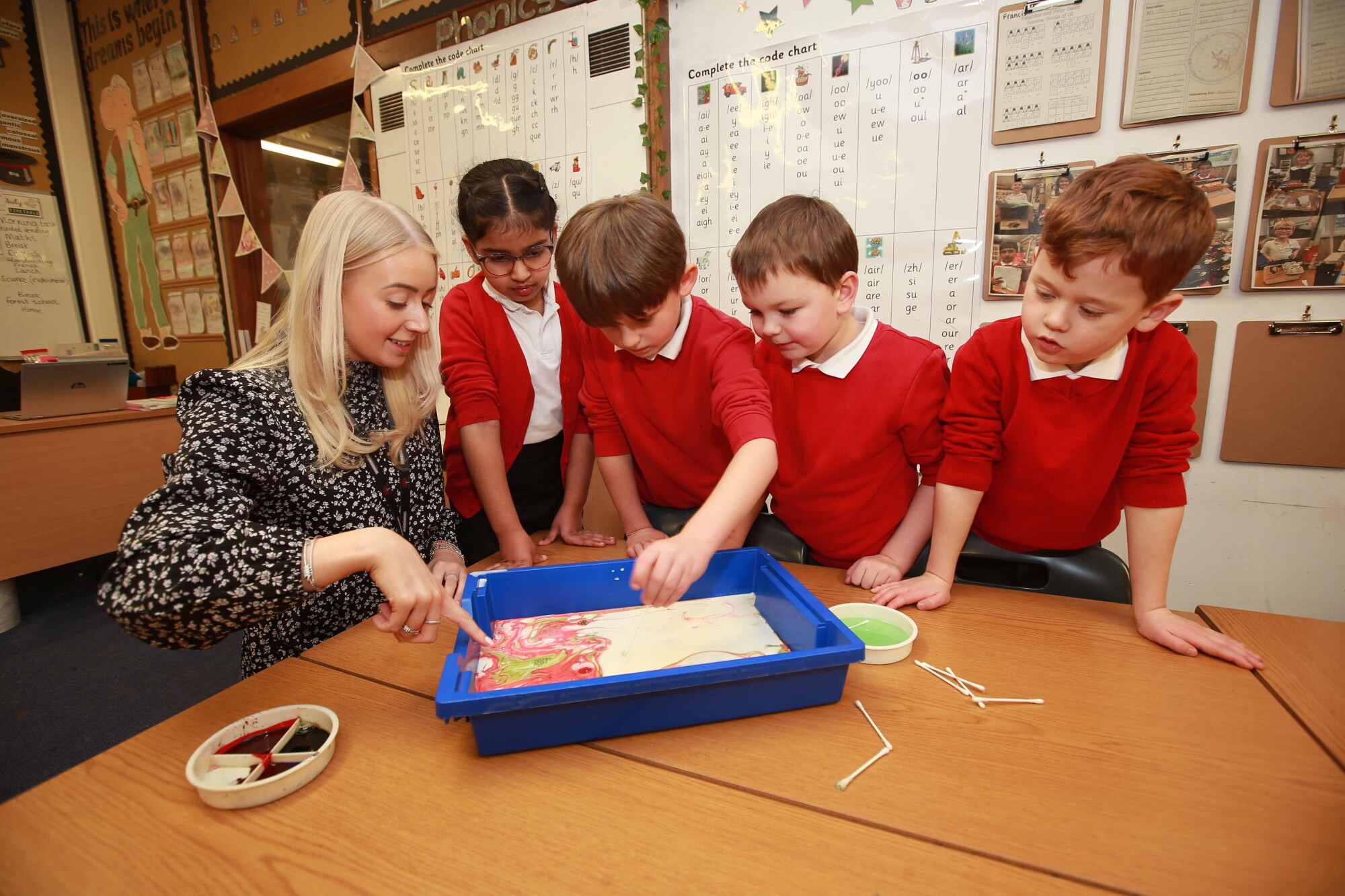
At Kingsway Primary School, we believe that children thrive when they feel that they belong.
Relational belonging means that every child feels:
- known and understood
- valued for who they are
- safe to express themselves
- connected to trusted adults and peers
- confident that they will be listened to and supported
This belief shapes our daily practice and underpins our approach to attendance, behaviour, wellbeing, inclusion and safeguarding. It is not something we “do” occasionally — it is the foundation of our school culture.
Why relational belonging matters
Children’s experiences of school are shaped by relationships.
When children feel they belong:
- they attend school more regularly
- they engage positively with learning
- they regulate emotions more effectively
- behaviour improves over time
- relationships with peers and adults strengthen
- wellbeing and resilience increase
When belonging is fragile, children may show this through:
- anxiety or withdrawal
- reluctance to attend school
- difficulties with behaviour or regulation
- challenges forming or maintaining friendships
At Kingsway, we understand that behaviour, attendance and wellbeing are deeply interconnected, and that relational belonging is key to supporting children in all three areas.
Our values‑led approach to belonging
Relational belonging at Kingsway is rooted in our core values, which guide how we think, act and respond:
We Care about Togetherness
– relationships are prioritised
– kindness, empathy and mutual respect are actively modelled
We Thrive on Difference
– diversity is recognised as a strength
– every child’s lived experience is valued
– inclusion and equity shape decisions and practice
We are Passionate about Learning
– emotional safety supports curiosity and challenge
– children are best able to learn when they feel secure
We are Inspired to Grow
– mistakes are part of learning
– children are supported to develop resilience and self‑regulation
These values are reflected in our policies, routines, relationships and conversations.
Relational belonging and behaviour
At Kingsway, we understand that behaviour is communication.
Our relational approach to behaviour:
- focuses on understanding why behaviour occurs
- avoids shame, public correction or punishment‑led responses
- maintains clear, consistent expectations
- prioritises repair and learning after difficulties
When a child becomes dysregulated, adults ask:
- What is this child telling us through their behaviour?
- What barriers might be present?
- How can we adapt our approach to support success?
Strong relationships allow adults to respond calmly and consistently, helping children return to learning and rebuild trust.
Relational belonging and attendance
Belonging plays a vital role in attendance.
Children are more likely to attend school when they:
- feel safe and welcomed
- have trusting relationships with adults
- feel connected to peers
- believe they are noticed and missed when absent
Our relational attendance approach ensures:
- early conversations rather than delayed intervention
- curiosity and support rather than blame
- strong links between attendance, wellbeing and safeguarding
- partnership working with families
Attendance is supported through relationships first, with clear expectations held alongside care and understanding.
Relational belonging and wellbeing
Children’s emotional wellbeing is supported through:
- stable, predictable relationships
- adults who take time to listen and notice
- calm, emotionally safe classrooms
- explicit teaching of emotional literacy and social skills
- opportunities for co‑regulation before expecting self‑regulation
Wellbeing is not a separate strand — it is embedded through daily interactions and routines across school life.
Inclusion, equity and relational belonging
Relational belonging is inseparable from inclusion.
We recognise that some children face additional barriers to belonging due to:
- SEND or neurodivergence
- social, emotional or mental health needs
- disadvantage or vulnerability
- previous disrupted attachment or trauma
At Kingsway:
- teaching is adapted, not fixed
- support is planned proactively, not reactively
- provision is adjusted to meet individual needs
- equity guides our responses, not uniformity
Every child deserves to feel that they belong, exactly as they are.
Relational belonging and safeguarding
Safeguarding is strongest where relationships are strong.
At Kingsway, relational belonging supports safeguarding by ensuring:
- children know trusted adults and feel confident speaking up
- changes in behaviour or attendance are noticed early
- concerns are responded to calmly and professionally
- families are engaged as partners wherever possible
Our safeguarding culture is relational, proactive and inclusive, recognising that early support and strong connections keep children safest.
Working in partnership with families
Belonging extends beyond the classroom.
We value strong partnerships with families, built on:
- open, respectful communication
- early conversations and shared understanding
- clarity around roles and responsibilities
- trust and collaboration
Our Working Together in Partnership Agreement reflects this shared commitment to supporting children’s emotional, social and behavioural development.
Trafford Virtual School – Belong Programme
Kingsway Primary School is proud to be an accredited member of the Trafford Virtual School Belong Programme.
This programme strengthens:
- relationship‑centred practice
- emotionally safe environments
- inclusive systems that recognise vulnerability
- early help and preventative approaches
Our involvement reinforces our commitment to ensuring that no child feels invisible, unsupported or disconnected.
Our commitment to relational belonging
At Kingsway Primary School, we are committed to:
- creating a school where every child feels they belong
- placing relationships at the heart of learning and behaviour
- responding to difficulties with understanding and clarity
- supporting attendance, wellbeing and safeguarding through connection
- ensuring inclusion and equity are lived values, not aspirations
Relational belonging is the foundation upon which learning, wellbeing, safety and success are built.